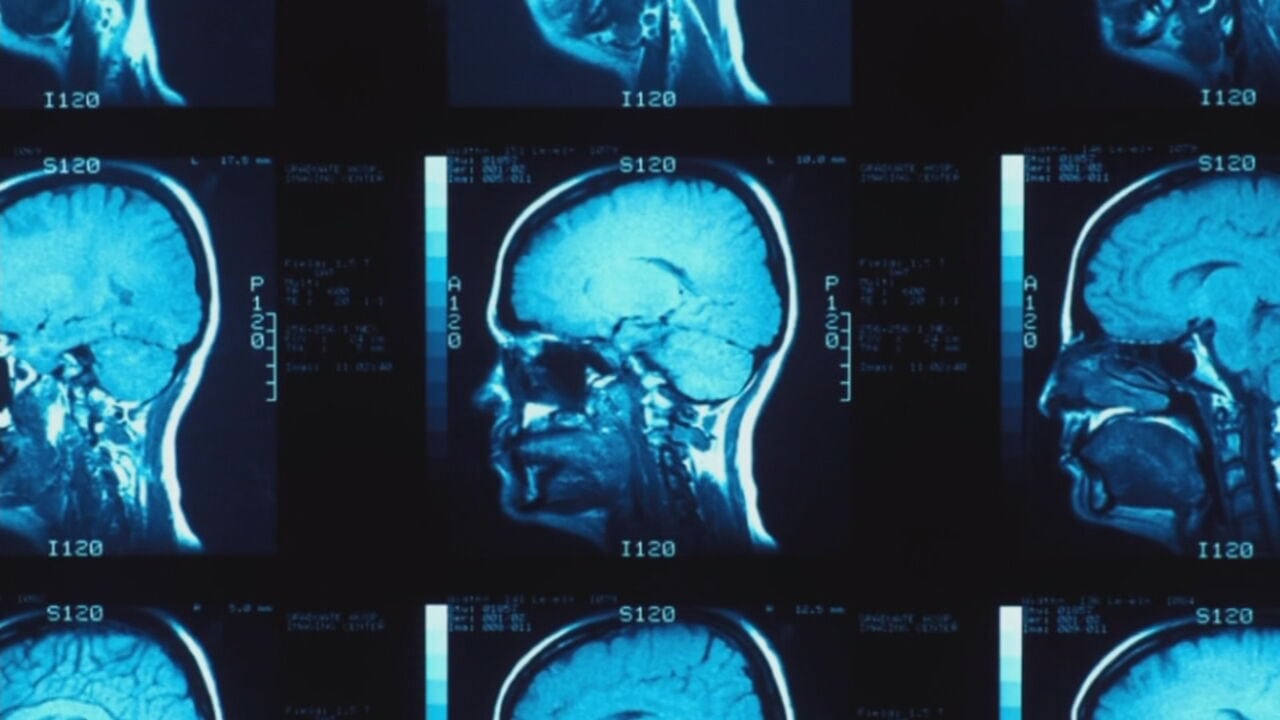
BOSTON — Researchers led by Boston University and Banner Health say they have identified a blood marker that could eventually allow doctors to detect chronic traumatic encephalopathy, or CTE, in people while they are still alive.
The discovery could represent a major step toward diagnosing the progressive brain disease, which has been linked to repeated head impacts and, until now, can only be definitively diagnosed after death through an examination of brain tissue.
The findings, published in the Journal of the American Medical Association, or JAMA, center on a protein called endogenously cleaved microtubule-binding region tau, or eMTBR-tau.
Researchers found significantly higher levels of the protein in blood samples from former football players who were later found to have high-stage CTE during autopsies.
“This is a game changer,” said Michael Alosco, PhD, corresponding and co-senior author and co-director of clinical research at the BU CTE Center. “We are still in the discovery phase, and it’s a small sample size, but if future studies validate these findings, this blood test will allow us to detect CTE with a high level of accuracy and open the doors to clinical trials and treatment.”
How did researchers test for CTE in blood?
The study involved 21 former American football players who had participated in Boston University-led research. The players had blood drawn while they were alive and later donated their brains to the BU CTE Center Brain Bank.
Autopsies found:
- 18 of the 21 players had CTE
- 16 had high-stage CTE, classified as McKee stage 3 or 4
- Two had low-stage CTE, classified as McKee stage 1 or 2
- Three did not have CTE
Researchers then compared those findings with levels of eMTBR-tau in blood plasma collected while the participants were alive.
They found that eMTBR-tau concentrations were significantly higher among people who ultimately had high-stage CTE than among those with low-stage CTE or no CTE.
The marker was not elevated in the participants with low-stage CTE or no CTE, meaning the findings currently appear most applicable to advanced disease.
Of the 21 players studied, 12 played professional football, seven played at the college level, and two played in high school.
Eleven of the 12 former professional players, four of the seven former college players, and one of the two former high school players had high-stage CTE, according to the research team.
Researchers distinguish CTE marker from Alzheimer’s marker
Five participants with CTE also had Alzheimer’s disease.
Researchers said eMTBR-tau levels were highest among people who had both CTE and Alzheimer’s. The team also examined p-tau217, a blood marker used to detect Alzheimer’s disease, and found that it was elevated only in participants who had Alzheimer’s.
Nicholas Ashton, PhD, co-senior author and senior director of Banner Health’s Fluid Biomarker Program, said blood testing has already changed how researchers and doctors approach Alzheimer’s disease.
“With this new study, we are optimistic that the same will be true for CTE,” Ashton said.
Adding weight to the findings, a separate research team published another study in the same issue of JAMA that also found elevated blood plasma eMTBR-tau243 among people with autopsy-confirmed CTE. The two research teams studied different cases and used different methods.
Researchers say the independent findings strengthen evidence of an association between the blood marker and CTE.
Can you get a blood test for CTE now?
No.
Researchers stressed that the blood test is not FDA-approved, is not available to the public, and should not currently be used to diagnose CTE.
The findings also remain preliminary.
Researchers cited several limitations, including the study’s small sample size of 21 people, the limited number of participants with low-stage CTE, and the lack of age-matched controls.
“While there is still much work to do to validate these findings before the test is ready to use in patients, I am very hopeful that this study marks a major milestone in our ability to diagnose and ultimately treat this devastating disease,” co-author Dr. Gil Rabinovici of the University of California, San Francisco, said.
Further research would need to determine how accurately the blood test works across larger and more diverse populations, particularly among people with earlier-stage CTE.
Researchers said people who are concerned about their brain health should be evaluated by a clinician who specializes in neurodegenerative conditions.
The participants were part of ongoing National Institutes of Health-funded research, including the DIAGNOSE CTE Research Project and BANK CTE. Banner Sun Health Research Institute in Arizona processed and analyzed blood samples.
What is CTE?
Chronic traumatic encephalopathy is a neurodegenerative disease associated in part with exposure to repetitive head impacts.
CTE has received significant attention because of its diagnosis in former football players and other athletes exposed to repeated head trauma.
One of the biggest obstacles to studying and treating CTE has been the inability to definitively diagnose the disease in living patients.
Researchers say that if these new blood-test findings can be validated, they could eventually help identify CTE during life and make it easier to conduct clinical trials and develop potential treatments.
Download the FREE Boston 25 News app for breaking news alerts.
Follow Boston 25 News on Facebook and Twitter. | Watch Boston 25 News NOW
©2026 Cox Media Group