
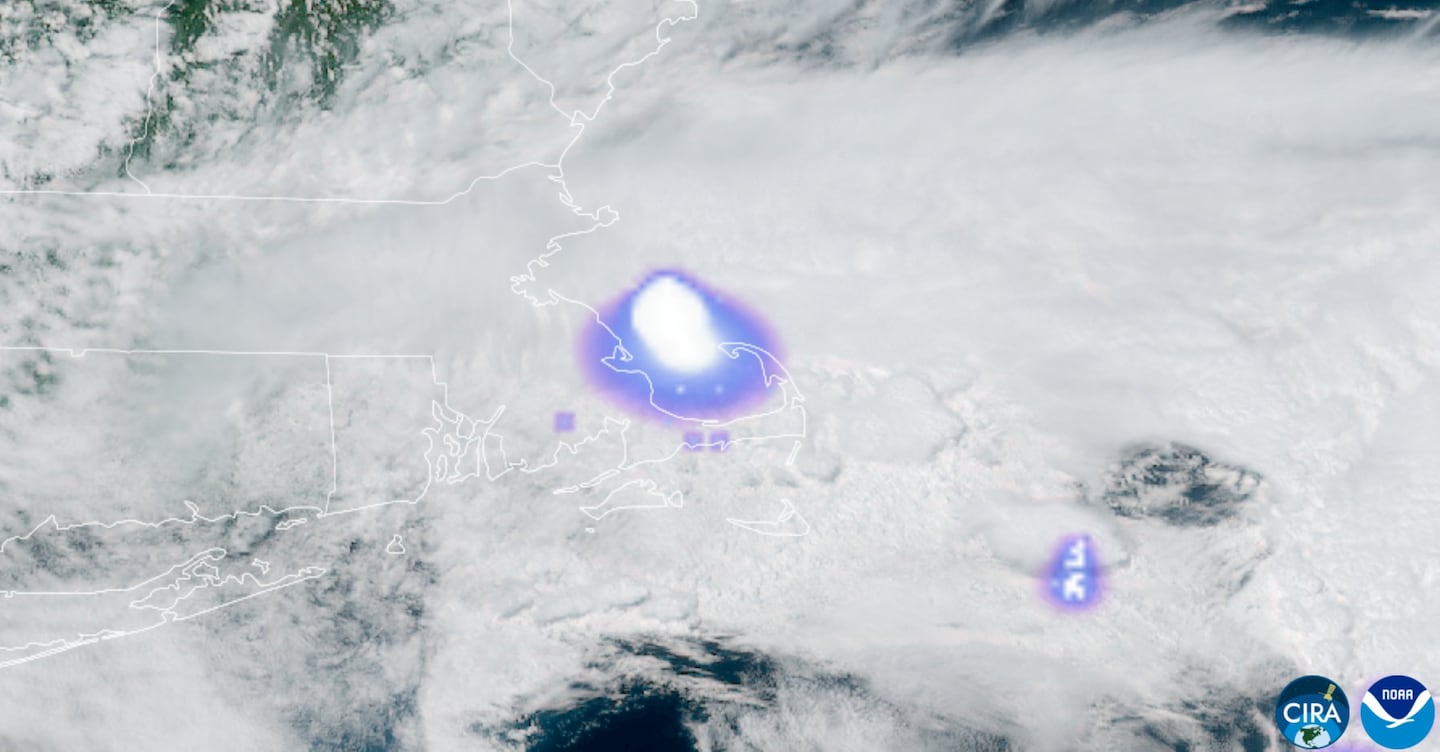
Mass. — NASA released new data and analysis on the meteor that crashed and landed in Cape Cod Bay on Saturday.
The data suggests that the five-foot-wide meteor had a steep entry angle at an unusually high altitude of 31 miles above ground, double that of the typical 15 miles.
The meteor itself was only on radar for approximately 2 minutes, quicker than the usual 8-10 minutes that meteors usually appear. NASA suggests that the data provided gives evidence that the meteor had broken into fragments and produced small pieces.
The density of the meteor was calculated and valued at 8000 kg/m3, which is consistent with an iron meteorite.
Saturday’s meteor caused quite the commotion, leaving many in the Northeast puzzled over the loud sonic boom that it generated. Many reported hearing an explosion, but NASA later confirmed that it was, in fact, a meteor.
One boom. Millions of confused New Englanders. Video sent to Boston 25 from viewers shows the moment the loud explosion was caught and heard on camera throughout the region.
— Boston 25 News (@boston25) May 30, 2026
STORY: https://t.co/l4DSn04feO pic.twitter.com/aul3h5JizT
With all values considered, NASA believes that the meteorite was “evidently very mechanically strong,” but cannot confirm this.
This is a developing story. Check back for updates as more information becomes available.
Download the FREE Boston 25 News app for breaking news alerts.
Follow Boston 25 News on Facebook and Twitter. | Watch Boston 25 News NOW
©2026 Cox Media Group
/cloudfront-us-east-1.images.arcpublishing.com/cmg/7QOJU3BNCJERBNKJC5LWTBYFLU.png)


