A powerful nor’easter has uncovered what may be the remains of a 19th century shipwreck on Nantucket, exposing a piece of maritime history that had been buried beneath the sand for decades.
Nantucket’s history as one of the “Graveyards of the Atlantic” was put on display this weekend when beach erosion from a powerful storm revealed large wooden wreckage along the island’s south shore.
The discovery was first documented by Jason Graziadei, editor of the Nantucket Current, who spotted the exposed timbers and captured photographs and video of the site.
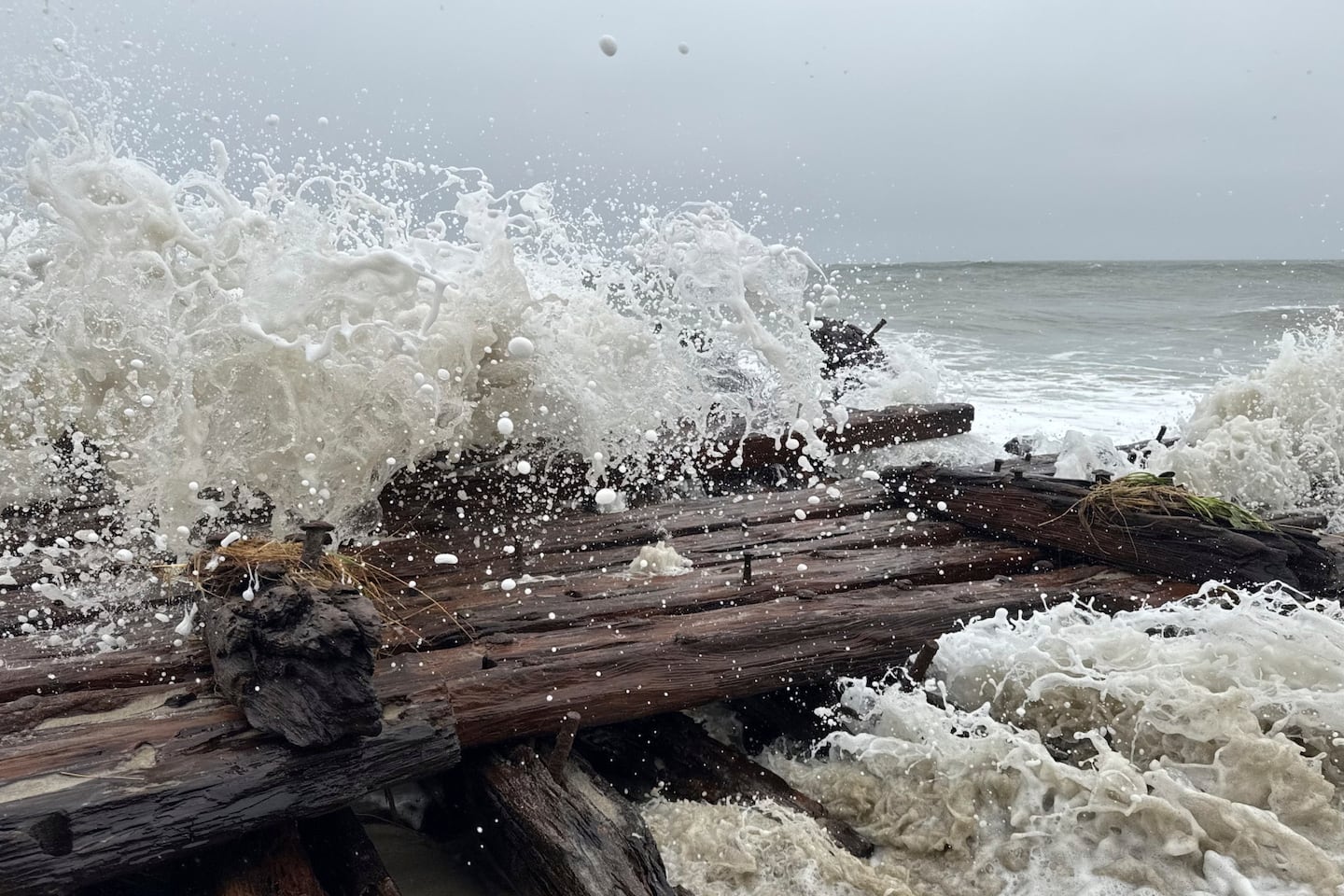
“Sure enough there it was sticking out of the dunes with the waves crashing over it, which was really a sight to see,” Graziadei said.
Graziadei believes the wreckage could be part of the Warren Sawyer, a schooner that ran aground off Nantucket in 1884.
The theory is based on similarities to ship fragments that surfaced in the same area several years ago.
“Because it was in the same location, same type of wood, it looked very similar to what we saw back nearly four years ago in 2022,” Graziadei said.
Experts are now working to determine the wreck’s true identity.
The Egan Maritime Institute has been evaluating the newly exposed fragments, which became visible after significant beach erosion caused by the storm. The institute notes that hundreds of shipwrecks are believed to rest in the waters surrounding Nantucket, earning the island its reputation as one of the Atlantic coast’s most notorious shipwreck regions.
The Massachusetts Board of Underwater Archaeological Resources is expected to visit the site next week to help confirm whether the wreckage belongs to the Warren Sawyer.
Historical accounts indicate that everyone aboard the schooner survived the wreck.
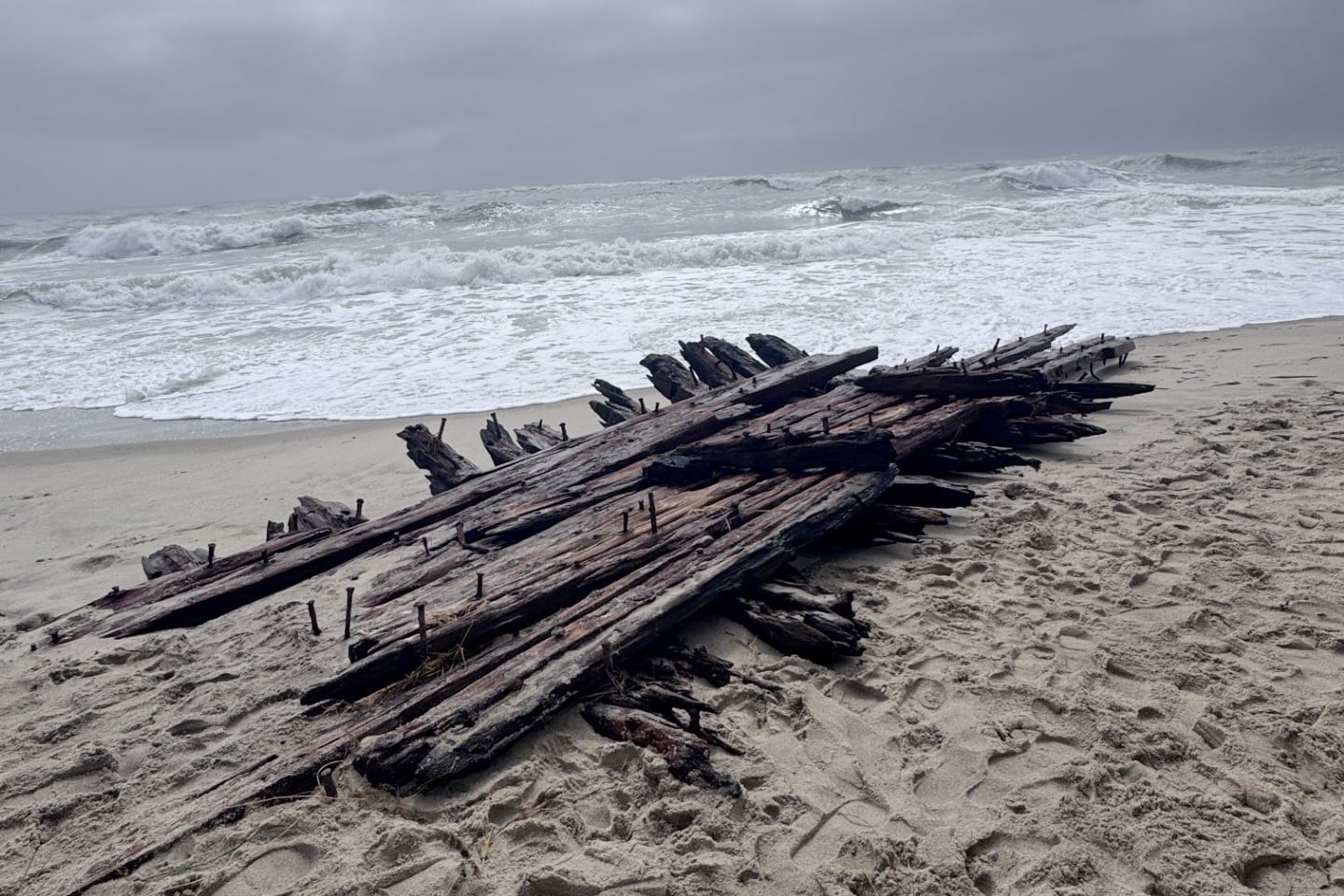
For Graziadei, the discovery offers a rare opportunity to connect with the island’s maritime past outside of a museum setting.
“I love this stuff. I love the history, and I think anytime you can come across a piece of maritime history that you can see for yourself, that you can touch and feel, and it’s sort of out there in the wild and not in a museum, it’s pretty cool,” he said.
The discovery is even more surprising given its location on a beach that is open to vehicle traffic.
“All summer long people were driving onto the beach and driving right over this spot where the wreckage was,” Graziadei said. “So many people this summer were just driving over a shipwreck, a 100-year-old shipwreck, and didn’t know it until it became exposed over the weekend.”
Because of its size, the wreckage is expected to remain in place on the beach. However, shifting sands could eventually cover the remains once again.
Officials with the Egan Maritime Institute encourage visitors to view the site but caution against removing artifacts or damaging the wreckage, noting that it is part of a protected historical site.
Download the FREE Boston 25 News app for breaking news alerts.
Follow Boston 25 News on Facebook and Twitter. | Watch Boston 25 News NOW
©2026 Cox Media Group
/cloudfront-us-east-1.images.arcpublishing.com/cmg/7QOJU3BNCJERBNKJC5LWTBYFLU.png)


