NANTUCKET — An ailing right whale is a troubling sign for New England marine scientists.
Researchers with Northeast Fisheries Science Center of the National Oceanic and Atmospheric Administration found a well-known, 18-year-old right whale named Dragon off the coast of Nantucket earlier this week in poor health.
The whale has obvious signs of undernourishment and distress due to an apparent entanglement further complicated by a buoy stuck in her mouth.
[Here’s how a right whale gets entangled in fishing gear]
“She is extremely emaciated and gray, suggesting she may have been entangled and unable to close her mouth for months,” said senior scientist Amy Knowlton, who has worked on the New England Aquarium’s Kraus Marine Mammal Conservation Program since 1983. Knowlton said the orange patches around Dragon’s head, seen in aerial photos, indicate the whale’s skin is infested with orange cyamids, a kind of lice that focuses on areas where there is an injury.
Dragon is a mother who has given birth to three calves, one of which is healthy and nearing breeding age. The first died within a week of its first sighting and the third hasn't been seen since its birth year in 2016.
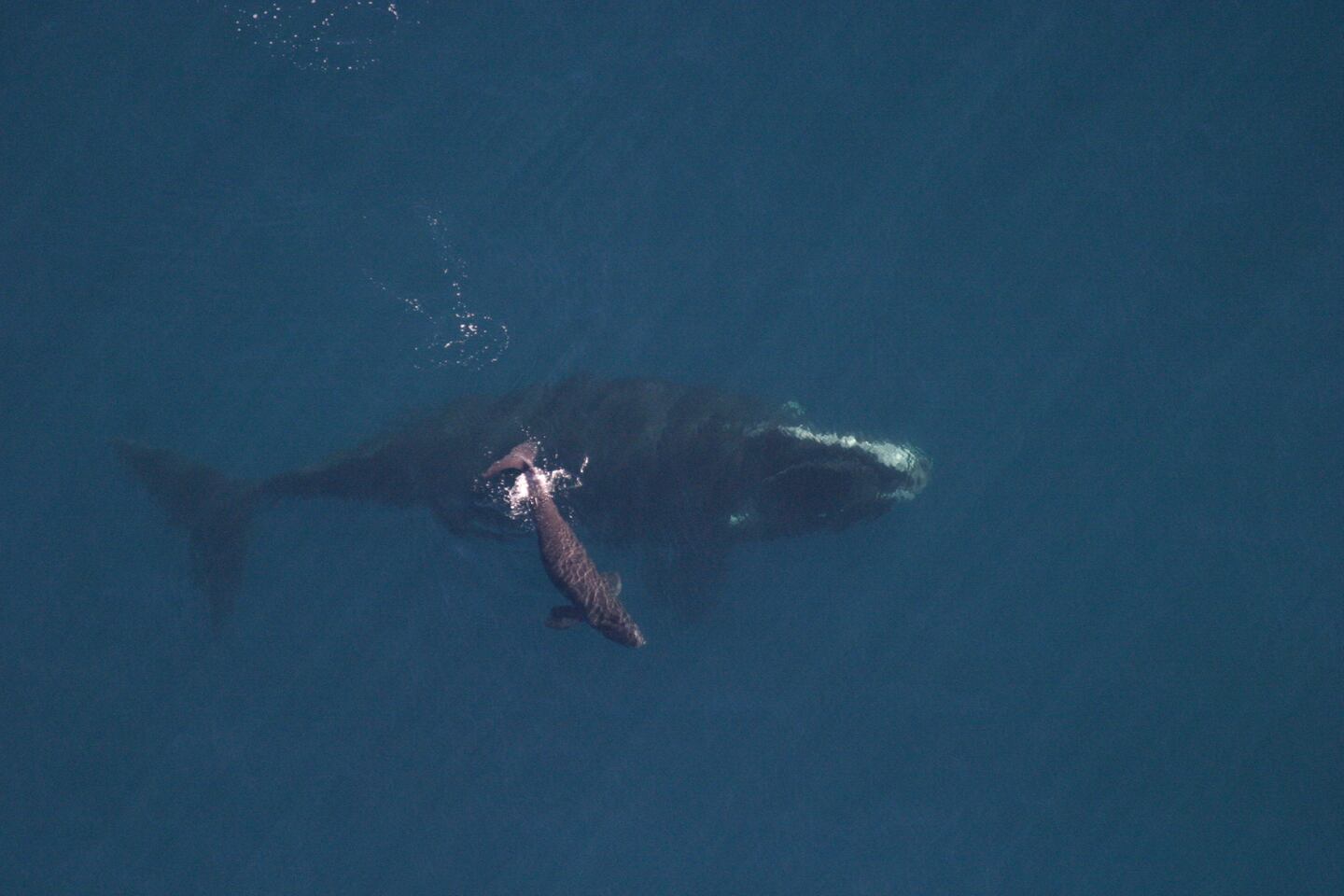
“It is both sad and discouraging to see Dragon, a whale we have followed from her birth through to maturity, entangled and in such poor health,” said Hamilton, who manages the North Atlantic right whale photo-identification catalog. “The hope for this species rides on the broad backs of these calving females. I fear we will lose this whale just as she enters what should be the prime of her reproductive life.”
Knowlton said the entanglement could have occurred anywhere, illustrating the need to implement broad-scale changes to fishing gear quickly. Scientists with the New England Aquarium’s Anderson Cabot Center for Ocean Life have been studying sustainable fishing practices, including ropeless lobster traps and weaker ropes, in collaboration with fishermen to reduce entanglements in gear.
The Aquarium has documented over 1,500 entanglements since 1980 and has observed a steadily increasing level of related severe injuries and deaths. In fact, 86.1 percent of right whales have been entangled at least once with more than half of them entangled twice or more, some as many as eight times over the course of their lives.
[Tension thaws over whale plan between lobstermen, feds]
© 2020 Cox Media Group
/cloudfront-us-east-1.images.arcpublishing.com/cmg/7QOJU3BNCJERBNKJC5LWTBYFLU.png)